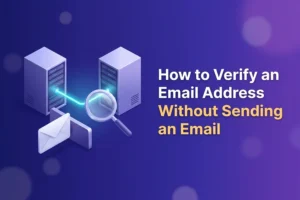
How to Verify an Email Address Without Sending an Email
Email verifiers confirm whether a mailbox exists using the same server conversation real delivery starts with – stopping before any message is sent. Here’s how it works, in plain English.
Welcome to the Reoon’s Blog section, your trusted source for practical insights on today’s fast-moving tech landscape. We share the latest trends, updates, and real-world takeaways shaping how we build, work, and connect in a digital-first world.

Email verifiers confirm whether a mailbox exists using the same server conversation real delivery starts with – stopping before any message is sent. Here’s how it works, in plain English.

Every bounce code decoded in one table: 550, 551, 552, 553, 554, 421, 450, 451, 452 and more – what each means and exactly what to do about it.

Your verification report says catch-all. Now what? A practical risk framework for deciding which catch-all addresses are worth emailing, which need caution, and which to delete.

Bounce notices for emails you never sent usually mean a spammer forged your address, not that you were hacked. Here’s how to tell which in two minutes.

Every service claims 99% accuracy, so claims won’t help you choose. These seven criteria will – including a free do-it-yourself accuracy test that takes about an hour.

One bounced email is harmless. Hundreds are not. Here’s what actually happens when you hit send to an invalid address – and the point where it starts costing you deliverability and money.