You launch a campaign. The signups roll in. Your dashboard looks great. Then the reality hits:
- Half the “leads” never reply
- Trial users disappear after 5 minutes
- Newsletter engagement drops
- Your sales team complains the leads are junk
Sometimes the culprit isn’t your offer, your copy, or your funnel. It’s something sneakier.
Disposable emails (also called temporary or throwaway email addresses).
In this guide, we’ll cover what disposable emails are, why they can quietly hurt SaaS, newsletters, and lead gen, and the simple steps you can take to prevent them—without turning your signup flow into an obstacle course.
What is a disposable email?
A disposable email is a temporary email address that people use for quick access, then abandon.
Many disposable inboxes:
- exist for a short time (sometimes minutes, sometimes hours)
- are used to bypass “give me your email” gates
- are rarely checked again after the initial confirmation
To be clear: not everyone using a disposable email is “bad.” Sometimes people use them for privacy.
But from a business perspective, disposable emails often have one consistent outcome:
They look like a lead… but behave like a dead end.
Why people use disposable emails (so you can respond intelligently)
Understanding the “why” helps you choose the right prevention strategy.
Common reasons:
- Privacy: “I don’t want marketing emails.”
- Testing: “I just want to see what this is.”
- Freebies: “I want the download/coupon without commitment.”
- Abuse: “I want multiple free trials / to bypass limits.”
- Low intent: “I’m not serious; I’m just clicking around.”
Depending on your business, some of those users might still be valuable.
But if disposable emails are common in your list, you’ll usually see problems in at least one of these areas: lead quality, deliverability, and revenue attribution.
How disposable emails hurt SaaS (real-world impact)
1) Fake accounts and trial abuse
Disposable emails make it easy to create multiple accounts. If your product has:
- free trials
- usage limits
- freemium tiers
Disposable emails can turn “trial” into “infinite free usage” for abusers.
2) Garbage user data (and bad product decisions)
If a big portion of signups are disposable, your analytics become noisy. You might think:
- Activation is weak
- Onboarding emails “don’t work”
- Your product-market fit is worse than it really is
When the reality is: many of those “users” were never real prospects.
3) Higher support and moderation costs
Disposable email users are more likely to:
- spam your app
- create abusive content
- trigger fraud checks
Even if they’re a small percentage, they can create a disproportionate amount of mess.
How disposable emails hurt newsletters
1) Lower engagement signals
Disposable emails typically don’t engage long-term. They stop opening. They don’t click. They don’t reply.
Over time, low engagement can harm deliverability because mailbox providers learn that your emails aren’t wanted (or at least not interacted with).
2) Dirty list = misleading metrics
Disposable emails inflate subscriber count but don’t behave like real subscribers.
That can make your growth look better than it is… until it doesn’t.
3) Wasted email platform costs
If your email tool charges by subscriber count, disposable emails are literally paid dead weight.
How disposable emails hurt lead gen (ads, landing pages, funnels)
1) You pay for leads that can’t be nurtured
If you run paid ads, disposable emails can quietly destroy ROI:
- You pay to acquire the lead
- You send follow-up sequences
- They never convert (because the inbox is abandoned)
2) Sales teams lose trust in marketing
If your reps keep seeing leads that can’t be contacted, they stop trusting inbound leads.
That “marketing vs sales” friction is expensive—and totally avoidable.
3) You lose the chance to recover typos
Not all bad emails are disposable. Some are just mistakes (like gmial.com).
If you don’t have validation, you lose real prospects simply because they typed fast.
How to spot disposable emails (without guessing)
Sometimes you can spot them manually, but it’s not reliable. Disposable domains change, and new ones appear constantly.
Here are more dependable approaches:
- Real-time email verification at signup (best for prevention)
- Bulk verification for existing lists (best for cleanup)
- Segmentation rules (treat disposable as “do not nurture”)
If you want a foundational refresher, you can link this internally:
Email Verification 101: What It Is, Why It Matters, and How It Works
How to prevent disposable emails (best practices)
1) Block disposable emails at signup (the highest-impact move)
If disposable signups are hurting you, blocking them at the form level is usually the best solution.
The key is to do it in a way that doesn’t kill conversions:
- keep the check fast (so it doesn’t slow down the form)
- show a friendly message (“Please use a real email so you can receive updates/access.”)
- allow genuine users to correct typos
Reoon option: Reoon Email Verifier supports real-time validation through its API. Quick API mode is designed for speed (around 0.5 seconds), which makes it suitable for signup flows where people are waiting on the screen.
2) Decide what to do with “privacy-focused” users
Some users use disposable emails because they don’t want marketing. That doesn’t always mean they’re useless—it means they don’t want your follow-up.
Two common approaches:
- Strict: block disposable emails completely (best for SaaS trials and serious lead gen).
- Flexible: allow them, but restrict features or require a real email for important actions (best when privacy is part of your brand promise).
There’s no “one right answer.” Choose what fits your product and audience.
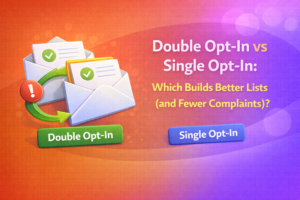
3) Use double opt-in (when list quality matters most)
Double opt-in reduces junk signups because users must confirm access to the inbox.
It won’t catch every disposable email (some disposable inboxes can still receive the confirmation), but it raises the bar and often improves long-term engagement.
4) Verify and clean your existing list (bulk verification)
If you already have disposable emails in your database, the fastest cleanup is bulk verification.
Then segment outcomes like:
- Safe/Role: nurture normally
- Disposable: suppress or exclude from campaigns
- Invalid: remove immediately (they will bounce)
- Catch-all / Unknown: treat as higher risk and handle carefully
If you’re building a full pre-send process, link this internally:
Email List Cleaning Checklist: The Exact Steps to Do Before You Send
A simple policy you can copy (for most businesses)
If you want a “default policy” that works for many SaaS and lead gen teams:
- Block disposable emails at signup (real-time validation)
- Verify bulk lists before campaigns
- Exclude disposable from newsletters and sequences
- Re-verify older segments monthly/quarterly (list hygiene)
This keeps your list cleaner over time instead of forcing you into constant “big cleanups.”
How Reoon Email Verifier helps (without overpromising)
Reoon Email Verifier is built for both:
- Bulk email verification (upload TXT/CSV, get detailed results and downloadable segments)
- Real-time validation (API) to help prevent disposable emails during website signups
It also provides an AI-powered 0–100 score per email, so you can be stricter for cold outreach and a bit more flexible for low-risk lists if you choose.
If you want to test quickly, a great first step is verifying a small sample list (200–500 emails) to see how much disposable/junk is hiding in your data.
Free registration (no card required): Create a Reoon account
FAQ
Are disposable emails always “bad”?
Not always. Some users use disposable emails for privacy. But for many businesses, disposable emails often correlate with low intent, fake signups, trial abuse, and poor long-term engagement.
Should I block disposable emails on my signup form?
If disposable signups are hurting your lead quality, trial abuse, or deliverability, blocking them is usually a good move. If privacy is central to your brand, consider a flexible policy (allow but limit features until a real email is provided).
Will email verification stop every disposable email?
Verification and detection significantly reduce risk, but no system can promise 100% coverage forever because disposable domains constantly change. The goal is practical prevention, not perfection.
If I already have disposable emails in my list, what should I do?
Run bulk verification, segment the results, and suppress disposable emails from campaigns. Then add real-time validation at signup so the problem doesn’t keep reappearing.
Does blocking disposable emails reduce conversions?
It can slightly reduce raw signup counts, but it often increases quality. Many teams find that it improves downstream metrics (activation, replies, revenue per lead) because fewer “fake” signups enter the funnel. As you will be able to contact them more efficiently later via email, the conversions and profits are likely to increase a lot.